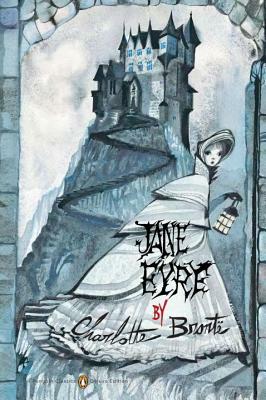
Description
Bronte’s infamous Gothic novel tells the story of orphan Jane, a child of unfortunate circumstances. Raised and treated badly by her aunt and cousins and eventually sent away to a cruel boarding school, it is not until Jane becomes a governess at Thornfield that she finds happiness. Meek, measured, but determined, Jane soon falls in love with her brooding and stormy master, Mr Rochester, but it is not long before strange and unnerving events occur in the house and Jane is forced to leave Thornfield to pursue her future.
I loved Jane Eyre! And it was a very pleasant surprise because I came into it expecting the reading of it to be similar to Pride and Prejudice, a classic romance novel that I could see the appeal of but not particularly love myself. Happily, I was very wrong.
Today, publishers just publish the novel by the name Jane Eyre with Charlotte Bronte as the author, but when originally published in 1847, it was titled Jane Eyre: An Autobiography with Charlotte Bronte’s pseudonym Currer Bell listed as the editor. Charlotte Bronte actually did include some semi-autobiographical experiences of her own in the first-person narrative, most notably in the passages at the beginning of the story of Jane’s time at the atrocious Lowood school. Charlotte and three of her sisters were sent to a “charity school” for children of clergymen and suffered from lack of food, heat, and adequate clothing just as Jane and her schoolmates did. Charlotte’s sisters, Maria and Elizabeth, died of tuberculosis and Charlotte and Emily Bronte were withdrawn from the school to continue their education at home. Charlotte, like Jane, went on to work as a governess.
I was immediately intrigued by the preface. Charlotte Bronte felt the need to defend herself from critics that called her novel immoral, and she wrote, “Conventionality is not morality. Self-righteousness is not religion. To attack the first is not to assail the last.” She could have written that in 2026. I was curious to see what critics considered “immoral”. After reading the novel, I was more baffled then ever. I found Jane to be a very moral person, frequently praying aloud to God, offering forgiveness to those who deeply wronged her, and turning away from the man she loved even though it would have given her an easier situation in life. So why the criticisms of being “immoral” and “anti-religion”? It was in part the negative portrayals of clergymen, particularly Mr. Brocklehurst, the man in charge of Lowood school and Jane’s cousin St. John Rivers. Jane calls out Mr. Brocklehurst’s hypocrisy, uncaring nature, and desire to only make himself look good in front of others. Later, Jane refuses to do what her cousin St. John wants just because he feels he’s on a mission from God and he thinks it’s Jane’s job to support him or she’s against God’s will. People like those men hate it when others actually read their Bibles and come to have real relationships with the Lord because then that can’t just blindly control them to do whatever they want “in the name of God.” So it was in 1847, so it is in 2026. Ok, so I see why some of these critics were complaining about the novel. It depicted a woman who had sincere faith rather than merely following societal conventions and wasn’t controllable by the men in authority around her.
Jane fought to get her education in the midst of terrible conditions at school and then used that education to go out in the world and try to make her own way. She did so courageously, not having anyone in the world to rely upon. She found her way to Thornfield to work as a governess. It’s there she meets Mr. Rochester.
Maybe it’s because I had just recently read Rebecca, but I was struck by the thought while reading that perhaps old Rochester and Max de Winter should form some sort of “We have a terrible secret about our first wives maybe we’ll go find some young, naïve woman who won’t question us” club. Jane’s convictions see her walk away from Rochester when she learns his secret unlike the unnamed second Mrs. de Winter. As much as I loved Jane, I have mixed feelings about Rochester. He could be funny and his and Jane’s conversations where they match wits are amusing, but his secret was awful and the resolution so tragic.
After I finished the novel, I watched the 1983 BBC miniseries starring Zelah Clarke and Timothy Dalton and I absolutely loved it. It is a fantastic adaptation.
I wish I had read this one sooner. I kept thinking while reading, young Rachel would have really liked this story. I read a library copy of Jane Eyre– I make regular use of my library and the library app Libby. I try to limit the number of books I actually buy these days, but I think I’m going to have to buy myself a copy of Jane Eyre. It’s one I’m going to want to re-read many more times I think in the years to come.
Other Rambling Thoughts:
- Reading doesn’t happen in a vacuum and thoughts on readings can be influenced by other books and experiences- In this case, John Green’s Everything is Tuberculosis (2025). I recently finished this great non-fiction book and reading about Helen Burns’ fate reminded me of it and of course several of the Bronte siblings, including Charlotte, passed away from TB. I highly recommend Everything is Tuberculosis. It is an interesting read on not only the history of the illness, but also the current state of world health and social determinants of health.
- I really came into the novel not knowing anything about the story. But thanks to the Friends episode where Phoebe and Rachel take a literature class together and Phoebe gets revenge on Rachel for stealing her thoughts about a book she didn’t read, I knew that there were no robots in it.
- ***spoiler****– I was pretty shocked by St. John’s proposal after he had found out he and Jane were cousins. With all his self-righteousness, moral authority, and finger wagging about the whole Rochester situation, he had no qualms proposing an incestuous marriage? And Jane gave this man every reason under the sun why she couldn’t marry him besides incest. According to google, “First-cousin marriage was legally permitted and socially common in 19th-century Victorian England, so contemporary readers did not view it as incest”. Ok, then.
Sources:
Critical Reception of Jane Eyre – UNSUITABLE

