
Happy Fall! It is officially my favorite time of year and finally starting to cool off a little around here. It’s the kind of weather that invites curling up with a good book and warm cup of tea. And this time of year, it can be fun to read something a little spooky.
I’ve always liked a good spooky story. As a kid at summer camp, I was the designated ghost story teller in our cabin each year. I used to read lots of scary stories leading up to the week of camp to find the right ones to retell to my cabin mates each year. One particularly stormy year when we were rained out for a full day of doing anything outside, I spent the better part of an afternoon retelling the last GooseBumps book I had read. We really knew how to set just the right atmosphere in the cabin and took it quite seriously. We’d push a couple of bunk beds together, all pile into the lower bunks squished together, hang blankets down around the sides of the bed to close ourselves in, and used those giant yellow torch flashlights as spooky lighting.

I remember that one year, I recounted the tale of “Talking Tina” from the classic Twilight Zone episode Living Doll. I always liked that episode as a kid, even though it freaked me out. I’m not sure what it is exactly about dolls, but there is no shortage of nightmare doll stories out there. Talking Tina, Annabelle, Robert, and the fictional Chucky (who was apparently inspired by the very real Robert) are all part of pop culture and live in our collective nightmares.
Dolls, as sweet and innocent as they can be for children’s playthings, also hold some mysterious ability to ignite our imagination to more terrifying possibilities. A few years back, a few friends and I went to Gatlinburg for a weekend, and at the cabin where we stayed, there was a random baby doll that had been left on one of the beds and it freaked us out. We had fun moving it around that weekend and hiding it for each other to find. But why should such a thing, that was probably just a toy that some poor child left behind, make grown adults scared when they see it pop up in some unexpected place?
The mystery around why dolls sometimes unsettle us brings us to today’s story of one of the most successful 19th century inventors, and one of his least successful ventures.
Thomas Edison’s Creepy Talking Dolls
In 1890, Thomas Edison, the famed inventor who brought us innovations such as the incandescent lightbulb in 1879, suffered one of his biggest failed projects when he created Talking Dolls. In 1877, Edison had used a tin-foil phonograph to record and play back sound for the first time in history. As with any new innovation, Edison thought about the applications of such technology and one of the ideas he came up with was to make talking dolls.
Talking dolls weren’t a new idea in Edison’s day. Dolls that could “talk” already existed in the market that said “Mama” and “Papa” using reeds and bellows. But Edison dreamed of more elaborate speech from his dolls. In 1878, he signed a contract with an entrepreneur to manufacture phonographic toys. The tin foil phonograph was too fragile for use in commercial products, and Edison worked to improve the design. From Edison’s improvements and through the work of others such as Alexander Graham Bell, the wax cylinder was developed as a more durable way of recording sound. And thus, the dream to put phonograph toys in the hands of children became more realistic.
This project became the first attempt to reproduce sound for commercial purposes. We are so used to hearing music, television, movies, and podcasts, that we have become desensitized to the idea of hearing sounds previously recorded by others. But in 1877, this concept was unfathomable to most, and even caused some to compare Edison to a wizard. Edison hired young women who essentially became the first recording artists to recite nursery rhymes for his recordings.
The dolls made their debut in April 1890. They stood 22 inches tall, weighed 4 pounds, had porcelain heads, wooden limbs, and a tin torso that held the phonograph. There was a hand crank in the dolls back to operate them and a horn speaker aimed the sound at perforations in the dolls’ chest to “talk”. They recited nursery rhymes like “Mary had a little lamb”, “Jack and Jill”, and “Hickory Dickory Dock”.
Unfortunately, they suffered many problems and consumers’ complaints began to pour in quickly about the poorly performing dolls. A Washington Post Headline in 1890 declared: “Dolls That Talk: They Would Be More Entertaining If You Could Understand What They Say.” Edison removed them from the market mere weeks after their launch.
In addition to being hard to understand and easy to break, the dolls were extremely expensive. They cost $20 in 1890, which today would be well over $500.
Edison was determined to fix the issues with the dolls and to relaunch a second version on the market. But unfortunately, he had too much debt from the failed venture and his company could not secure a loan to manufacture the improved dolls. Edison who had already experienced many careers successes was forced to moved on from the dolls as a failure. More than a century before Lady Gaga would come along and refer to her fans as “Little Monsters”, the famed inventor like to refer to his dolls by the same moniker.
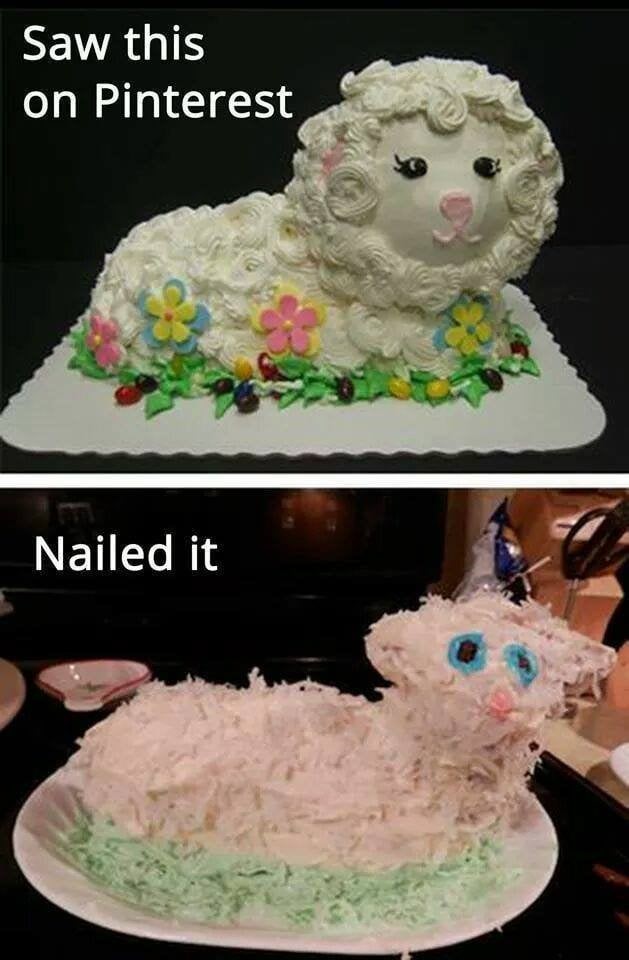
It’s not that the talking dolls were a bad idea, per se. Obviously, there are still similar talking toys in the market today. My child has several versions of stuffed animals that sing or tell stories, so the idea itself wasn’t necessarily the issue. The problem was that the final product didn’t turn out anything like what Edison’s original vision was for the dolls. And honestly, any of us who has ever attempted to re-create a project off Pinterest can probably relate to the vision not matching the final product.
For years, while the hardy dolls themselves endured in the hands of collectors, their sounds were almost lost to time as collectors and museums didn’t want to risk further damage to the fragile phonographs. But as technology continued to advance, it became possible to use laser to read the wax cylinders and digitize the recordings. You can listen below if you want to be a little creeped out by the shrieking voices.
Despite the failure of the dolls, Edison continued to move forward in his work and went on to many more successful projects. He has over 1000 US patents in his name and is regarded as one of the most prolific inventors in American History with his contributions bringing progress to multiple fields. Edison himself found the voices of his “little monsters” to be “unpleasant” per reports. Those voices may have haunted him as much as they do us today, but he continued forward anyway. As the meme says, “The horrors persist, but so do I”.
Happy October!




 Rachel F. Jean
I never knew about this invention of Mr. Edison. Quite interesting. Reminds me about my Chatty Cathy doll. You pulled the string on the back of her neck and she said things like, “I love you.” I won her. Long about 1959-1960, there was a new strip shopping center built along Gallatin Road in Madison, TN. – The Madison Square Shopping Center. They held a contest. You filled out a contest slip and dropped one in every store box in the shopping center to increase your odds. Each store had 2 prizes – 1st prize was a bike, 2nd prize was a Chatty Cathy doll. I won the doll from the barber shop! She talked for years, but she finally wore out and garbled something unintelligible when you pulled her string. This would have been around 70 or 80 years after Edison’s doll. There were several versions to what Cathy looked like. If you look up the images online, you’ll see a very distinctive similar image to Edison’s doll. I bet the Mattel company studied Edison’s plans very carefully before releasing their doll. Your story is a very interesting way to welcome the fall season this year. Nice piece of creative writing, as usual. Mrs. Piper, Miss Tracy, and Miss Smith would be proud!……………Mama
LikeLiked by 1 person